

Table of Contents
For twenty years, email marketing ran on one simple assumption: a human opens the inbox, scans subject lines, and decides what’s worth their time.
That assumption is breaking.
Gmail and Outlook are now running AI layers directly inside the inbox — summarizing threads, grouping promotions, surfacing “what matters,” and in some cases letting subscribers act on an email without ever opening it. Apple Mail groups offers and generates AI previews so people “get the point” without a single tap. The inbox isn’t just a mailbox anymore. It’s a filter, a judge, and increasingly, a decision-maker.
If you send email — whether you’re a solo founder or running campaigns for a growing brand — this changes what “good” email marketing actually means. Here’s what’s happening, and what to do about it.
1. Open rate is becoming a vanity metric
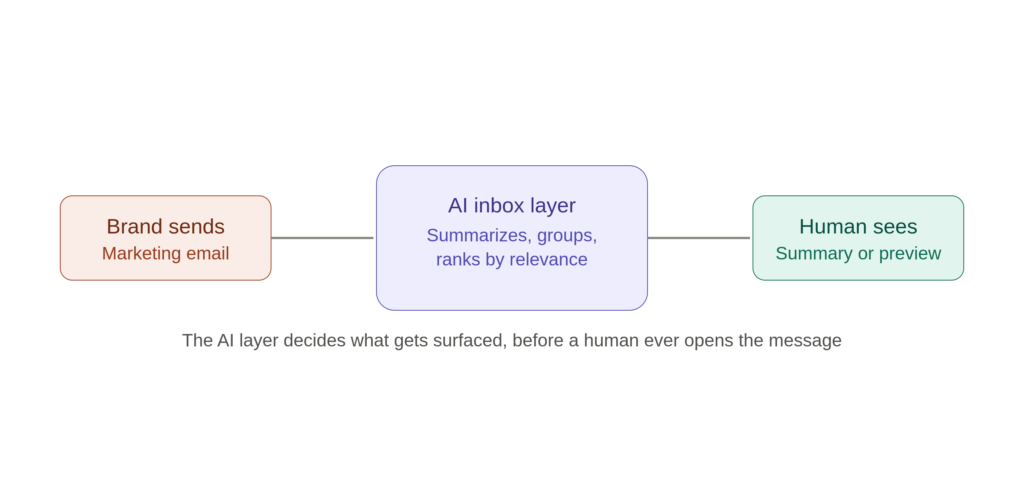
Apple Mail Privacy Protection already made open-rate tracking shaky back in 2021. Now Gmail’s AI summaries can tell a subscriber what an email says before they open it, which means people are getting the value of your email without ever registering as an “open.”
What to do: Shift your dashboards toward click-through rate, conversions, and revenue per send. If open rate is still your headline KPI, you’re measuring something the inbox itself is quietly making obsolete.
2. You’re now writing for two readers: the human and the AI
When an AI assistant summarizes your email before a human sees it, your subject line and first sentence aren’t just competing for attention — they’re being interpreted and condensed by software that decides what’s worth surfacing.
That means:
- Front-load your actual value proposition in the first line. Don’t bury the offer under three paragraphs of scene-setting.
- Write clearly and specifically. Vague, hypey copy (“You won’t believe this deal!”) gives an AI summarizer nothing concrete to extract — and it may just get compressed into “Promotional email from Brand X.”
- Structure matters more than ever. Clean formatting, clear CTAs, and one core message per email help both algorithms and humans get to the point.
3. Deliverability rules are no longer optional checkboxes
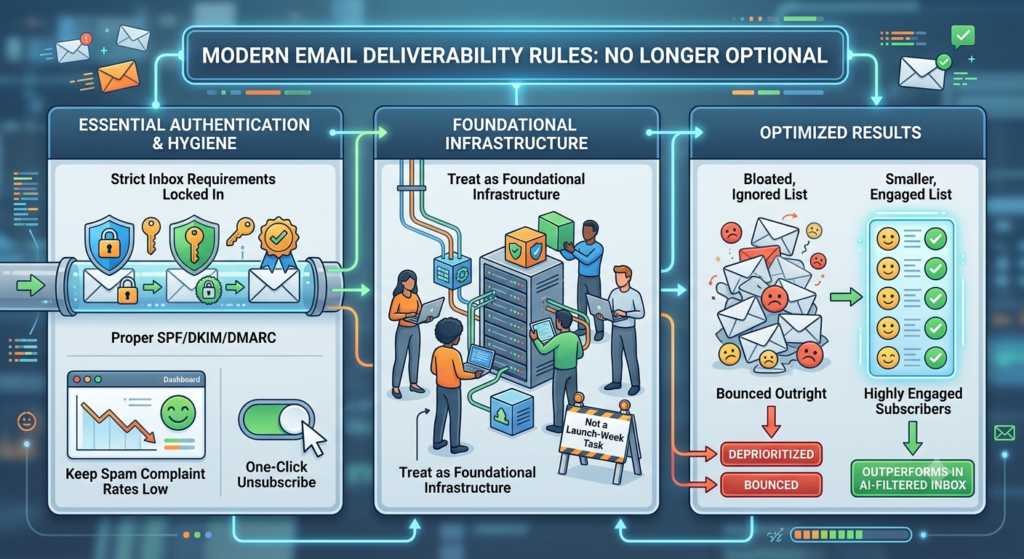
Gmail, Yahoo, and Microsoft have locked in strict requirements for anyone sending meaningful volume: proper SPF/DKIM/DMARC authentication, spam complaint rates kept low, and one-click unsubscribe. Miss these, and inbox providers won’t just deprioritize you — they’ll bounce you outright.
What to do: Treat authentication and list hygiene as foundational infrastructure, not a launch-week task. Regularly suppress unengaged subscribers before they drag down your sender reputation. A smaller, engaged list will outperform a bloated, ignored one every time in an AI-filtered inbox.
4. Hyper-personalization has moved from “nice to have” to “table stakes”
“Hi [First Name]” personalization is table stakes now — the real shift is toward behavior-driven relevance: what someone browsed, what they almost bought, when they typically engage. AI-powered inbox filtering rewards emails that feel individually relevant and quietly punishes generic batch-and-blast sends by burying them in promotions tabs or low-priority folders.
What to do: Use behavioral triggers — cart abandonment, browse history, past purchase patterns — to drive segmentation instead of relying only on demographic fields. Automated, lifecycle-based flows (welcome series, post-purchase, win-back) are consistently outperforming one-off campaign blasts on revenue per send.
5. Quality over quantity, permanently
People are getting 50–120+ emails a day and feeling overwhelmed by it — and over-emailing is now one of the top reasons subscribers unsubscribe. An intelligent inbox that’s actively grouping and filtering promotions has zero patience for noise.
What to do: Audit your send frequency honestly. Fewer, sharper, more relevant emails will beat frequent generic ones in an AI-mediated inbox almost every time.
The takeaway
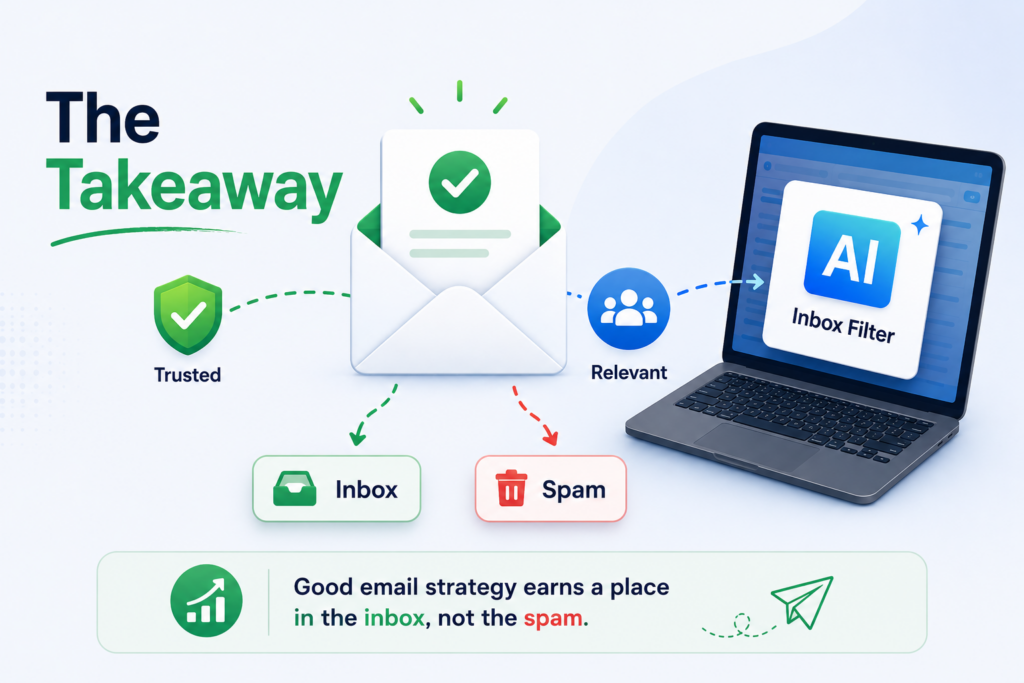
None of this means email marketing is dying — if anything, owned channels like email marketing are becoming more valuable as organic and social reach keep shrinking. But the game has changed: you’re no longer just writing for a person scrolling their inbox. You’re writing for a person and an AI system deciding whether your message is even worth their time.
The brands that win in this new era will be the ones that treat relevance, authentication, and clarity as core strategy — not afterthoughts. That’s exactly the kind of email marketing Postyman is built to help you run: clean deliverability, real segmentation, and campaigns designed to earn a place in the inbox, not just land in it.
Want to see how your current email marketing strategy holds up in an AI-filtered inbox? Start a campaign audit with Postyman today.