

You’re diligent about tracking your marketing spend. You negotiate with vendors, optimize your ad campaigns, and hunt for the best value. But what about your email marketing service? Are you sure you’re not overpaying?
For many businesses, the monthly subscription for an email platform is a “set it and forget it” expense. But as your contact list grows or your sending frequency increases, the costs can quietly balloon. What started as a negligible line item can transform into a significant chunk of your marketing budget.
It’s like a gym membership. You sign up for a great introductory rate, but over time, you’re paying for a dozen classes you never take. It’s time to ask: are you paying for a spin class when you just need the treadmill?
The Hidden Costs: Why Your Email Bill Keeps Creeping Up
Many popular email marketing platforms have pricing models that seem straightforward at first but contain hidden escalators. Here are a few common pitfalls:
- The Contact-Based Trap: Most providers charge based on the number of contacts in your list. This sounds fair, until you realize you’re paying for every single subscriber, even the inactive ones who haven’t opened an email in months. You’re essentially paying to store data, not to send emails.
- Restrictive Sending Limits: “Free” and “Basic” plans often come with surprisingly low daily or monthly sending caps. Once you exceed them, you’re forced into a priciertier, even if you only go over the limit once.
- Feature Gating: Need A/B testing, advanced automation, or detailed analytics? Those essential tools are often locked behind premium plans, forcing you to upgrade your entire subscription for one or two key features.
What to Look for in a Cost-Efficient Email Service
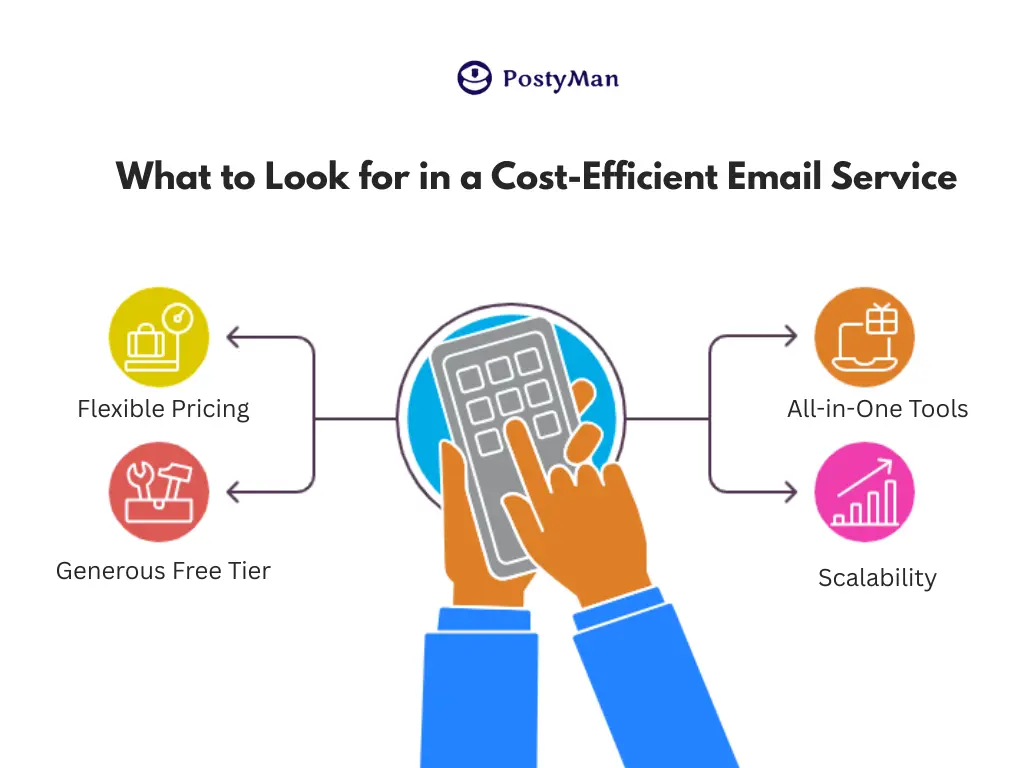
Finding a truly cheap email marketing service isn’t about sacrificing quality; it’s about paying for what you actually use. Here’s what to look for:
- Flexible Pricing Models: Look for providers that offer a choice between contact-based and volume-based sending. If you have a large list but only send a few campaigns a month, a pay-as-you-go or volume-based plan can save you a fortune.
- Generous Free Tiers: A good free plan isn’t just a trial. It should offer enough features and sending capacity to let your business grow without immediate pressure to upgrade.
- All-in-One Functionality: A platform that includes landing pages, sign-up forms, and basic CRM features in its standard plans provides immense value and saves you from subscribing to multiple separate tools.
- Scalability: The right service should grow with you. It should be affordable when you’re starting out and remain cost-effective as you scale to high volume email needs.
Cost Comparisons: Subscribers vs. Sending Volume
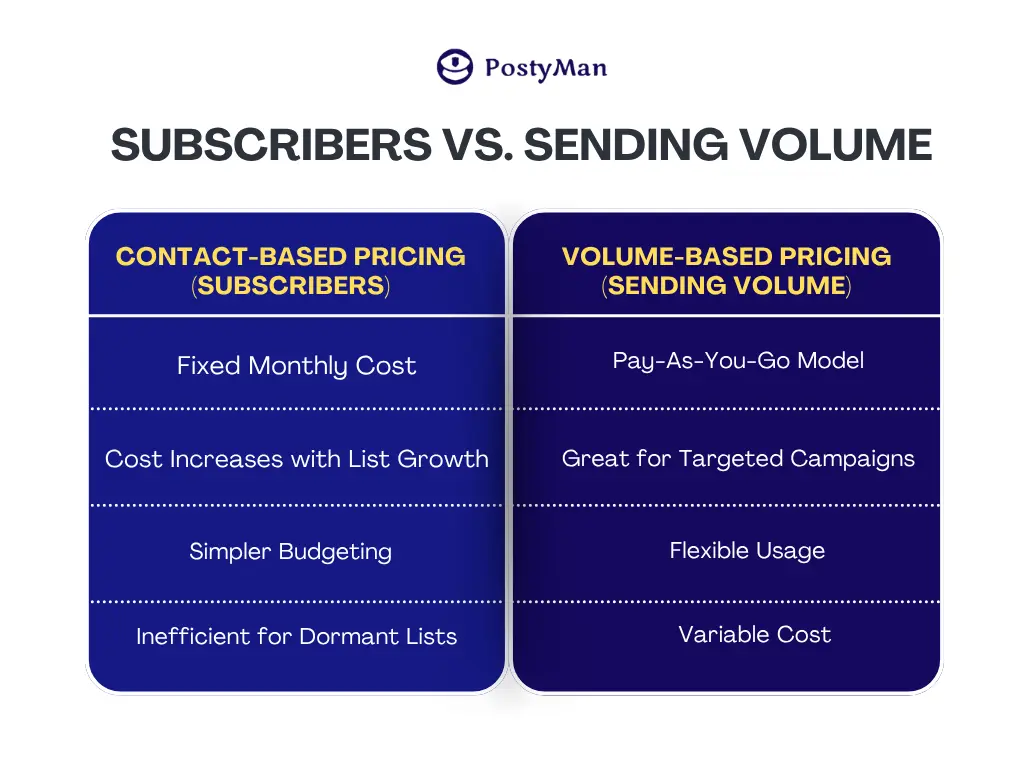
Let’s break down the two main pricing models to understand the impact on your email campaign cost.
- Contact-Based Pricing: You pay a flat fee based on the number of subscribers in your database.
- Pros: Predictable monthly cost.
- Cons: Expensive if you have a large but infrequently contacted list. It punishes you for growing your audience.
- Volume-Based (or Pay-As-You-Go) Pricing: You pay based on the number of emails you send.
- Pros: Highly cost-effective for businesses that send targeted, less frequent campaigns. You only pay for what you use.
- Cons: Can be less predictable if your sending volume fluctuates dramatically.
Imagine you have 20,000 contacts. With a contact-based provider, you could be paying upwards of $230 per month, regardless of whether you send one email or ten. With a volume-based model, sending two campaigns (40,000 emails) might only cost a fraction of that.
Why a Dedicated Bulk Email Service Is Better at Scale
As your business grows, your sending needs change. What worked for 1,000 subscribers becomes inefficient for 100,000. This is where a dedicated bulk email service shines. These platforms are built for scale and offer several advantages:
- Better Deliverability: They have the infrastructure and reputation to handle high volumes, ensuring your emails actually land in the inbox.
- Lower Costs per Email: The economics of scale mean you pay far less per email when sending hundreds of thousands or millions of messages.
- Advanced Features: You get access to sophisticated tools like dedicated IP addresses, advanced segmentation, and detailed analytics that are crucial for managing large-scale campaigns.
Don’t Guess, Calculate: How to Compute Your Email Marketing ROI
Are your email efforts actually paying off? Calculating your email marketing ROI is simpler than you think and essential for justifying your spend.
Here’s the basic formula:
ROI = [(Gross Profit from Email – Email Campaign Cost) / Email Campaign Cost] x 100
Example:
- You spent $150 on your email platform and content this month.
- Your email campaigns generated $2,000 in sales.
- Assume your profit margin is 50%, so your gross profit is $1,000.
ROI = [($1,000 – $150) / $150] x 100 = 566%
For every $1 you invested, you got back $5.66. When your ROI is this high, it’s clear that email is a powerful channel. But if your costs are too high, they can eat directly into this return.
The Bottom Line: Stop Overpaying and Start Investing Wisely
Your email marketing platform should be a growth engine, not a cost center. By understanding the pricing pitfalls and choosing a service that aligns with your actual needs, you can dramatically lower your costs without sacrificing performance.
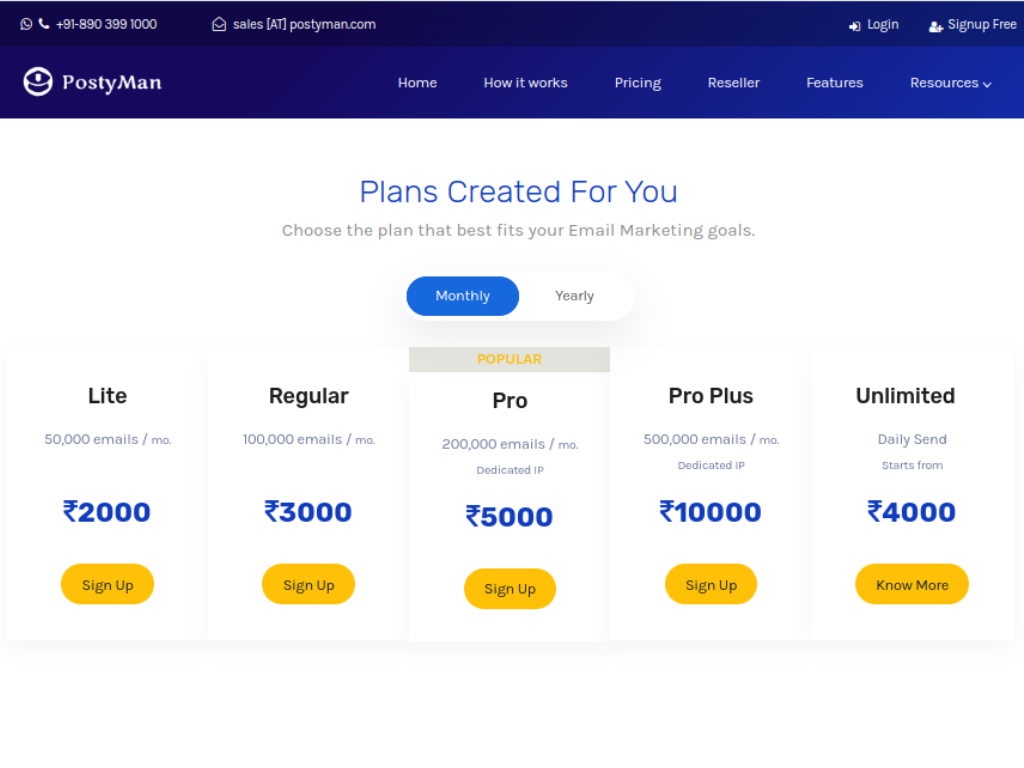
If you’re ready to see what a truly cost-effective platform looks like, explore what PostyMan has to offer. We’re built for businesses that want powerful features, excellent deliverability, and straightforward pricing that scales with your success.